Common AC Problems in Florida Homes and How to Prevent Them
Florida's heat and humidity are tough on air conditioning systems. In Lake Worth and throughout Palm Beach County, AC units run almost continuously for most of the year. That constant demand means wear and moisture-related issues show up faster here than in most other parts of the country. Knowing what to look for can save you from a breakdown on the hottest day of summer.
Here are the four most common air conditioner problems we see in Florida homes, along with what causes them and what you can do about them.
Clogged Condensate Drain Lines
In Florida's humid climate, this is the single most common AC repair call we respond to. As your system cools your home, it pulls moisture out of the air and drains it away through a condensate line. The combination of heat, moisture, and organic material creates the perfect environment for algae and mold to grow inside that line.
Warning signs to watch for:
- Water pooling near your indoor air handler
- A musty or mildew smell coming from your vents
- Your AC is shutting off unexpectedly (a float switch may have triggered to prevent overflow)
To prevent clogs, flush your condensate drain line with a diluted bleach solution every one to two months. Scheduling regular HVAC maintenance is even more effective, since a technician will clear and inspect the line as part of a full tune-up.
Frozen Evaporator Coils
It seems strange in South Florida's heat, but frozen coils are a real and frequent problem. When airflow is restricted or refrigerant levels drop, the evaporator coil gets too cold, and ice begins to form on it. Once that happens, your system loses its ability to cool your home effectively.
Common causes include:
- Dirty or clogged air filters are blocking airflow
- Closed or obstructed supply vents in rooms throughout the home
- Low refrigerant levels
- A malfunctioning blower fan
If you see ice on your unit or notice warm air blowing from your vents, turn the system off and let it thaw completely before calling for HVAC troubleshooting. Running a frozen system can burn out the compressor, which is a far more expensive repair.
The simplest prevention is changing your air filter every 30 to 60 days, especially during peak cooling season.
Low Refrigerant
Refrigerant is not consumed like fuel. If your system is running low, there is a leak somewhere. This is not a DIY fix. Refrigerant handling requires EPA certification, and leaving a leak unaddressed leads to poor cooling, higher energy bills, and eventual compressor failure.
Signs your system may have low refrigerant:
- Your home takes much longer than usual to reach the set temperature
- A hissing or bubbling sound near the indoor or outdoor unit
- Ice forming on the refrigerant lines or evaporator coil
- A noticeable spike in your electric bill without any change in usage
If you suspect a refrigerant leak, contact a licensed HVAC technician right away. The leak needs to be found, repaired, and the system properly recharged. Simply topping off refrigerant without fixing the source of the leak is a short-term patch that will cost you more over time.
Electrical Issues
Florida's summer storm season brings lightning strikes, power surges, and voltage fluctuations that can damage your AC's electrical components. Capacitors and control boards are all vulnerable. Electrical failures are one of the leading reasons AC systems stop working entirely during the hottest months of the year.
Watch for these warning signs:
- Your AC clicks on, but the fan or compressor does not start
- The circuit breaker connected to your AC trips repeatedly
- A burning smell or unusual sounds when the system tries to start
- The system turns on and off in short, rapid cycles
Installing a whole-home surge protector is a smart investment in Lake Worth, where afternoon thunderstorms are routine. Having your electrical connections inspected annually during a tune-up can also catch a failing capacitor before it takes out a compressor.
The Best Prevention Is Scheduled Maintenance
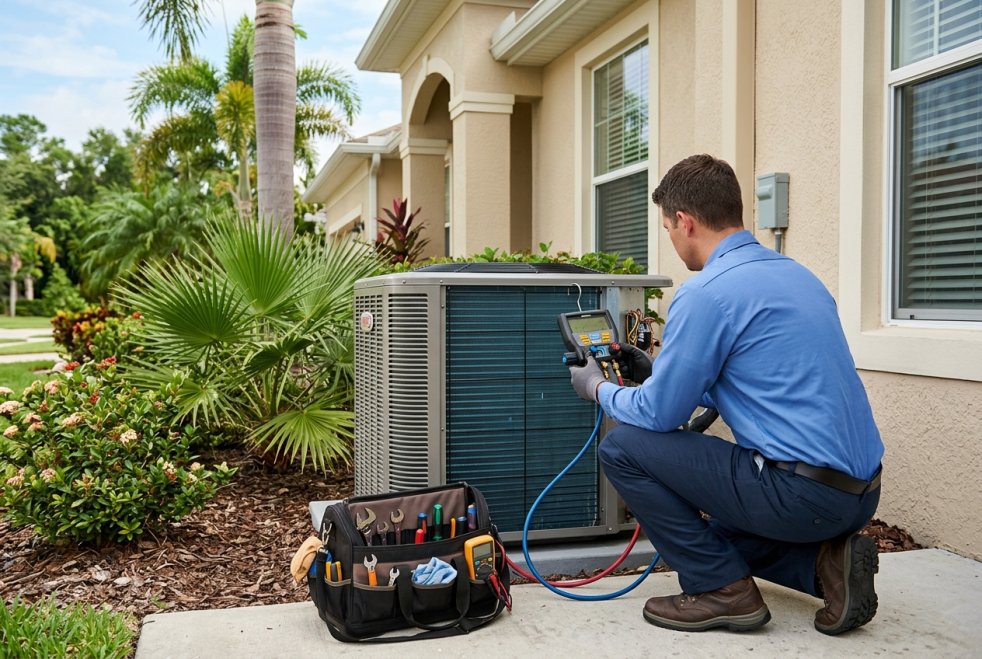
Most of the AC repair calls we see in Lake Worth could have been avoided with routine service. A seasonal tune-up addresses all four of these problem areas at once, from clearing the condensate drain to checking refrigerant levels, inspecting electrical components, and verifying airflow.
In Florida's climate, we recommend servicing your system at least twice a year. Once before summer and once in the fall is ideal. It keeps your system running efficiently, extends its lifespan, and helps you avoid emergency repair costs when you need cooling most.
A Plus Air Conditioning and Appliances Inc has been serving Lake Worth and the surrounding Palm Beach County area with reliable, honest HVAC service. Whether you are dealing with an active problem or want to get ahead of one, our team is ready to help.
Call us today at (561) 858-0840 to schedule your AC inspection or maintenance visit. Do not wait until your system fails in the middle of a Florida summer.